
Future Tech:Stage Braunschweig
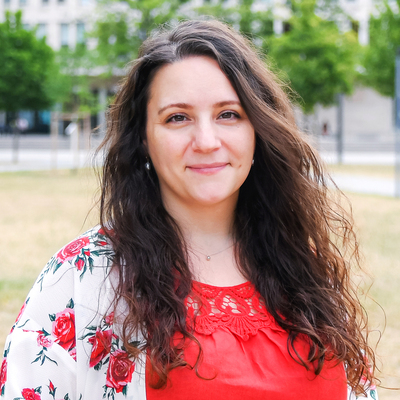
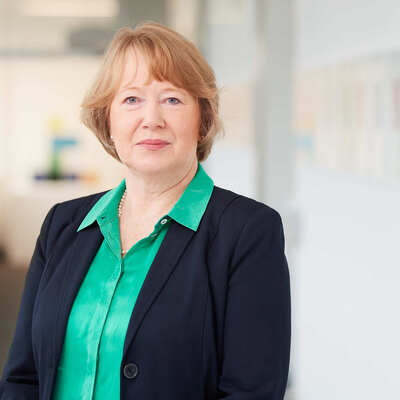
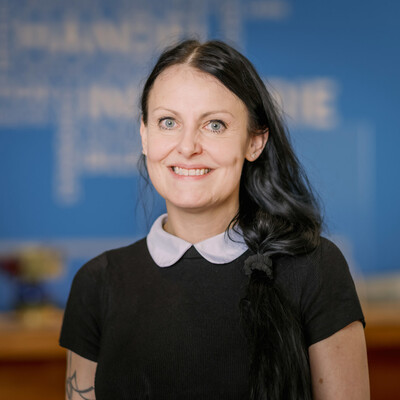
Future technologies, their significance, potential impact, opportunities and risks for higher education took centre stage in Braunschweig. Whether outer space (Rabea Rogge), communication space (Udbhav Tiwari), virtual space (Prof. Dr Frank Steinicke) or speculative space (Theresa Hannig, Prof. Dr Eckart Voigts and Aylin Dilek Walde), the Future‑Tech:Stage opened the floor to a wide range of visions and scenarios. The Media Lab:Stage complemented the programme with an in-depth exploration of virtual learning spaces—user-centred, technically innovative, and international
Keynotes
Interactive programme
Evening programme
Stage programme
Keynotes

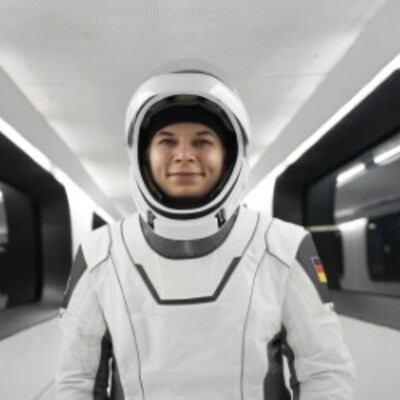
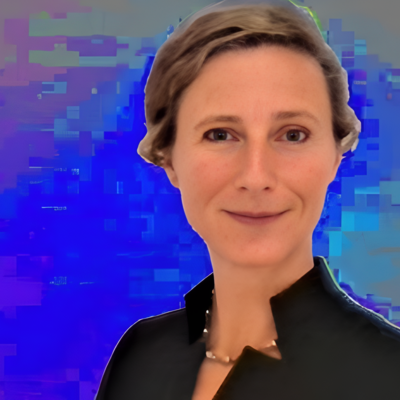
Rabea Rogge
(Astronaut / Electrical Engineer, NTNU / SpaceX)
The first German woman in space – opening up a new perspective on our future.

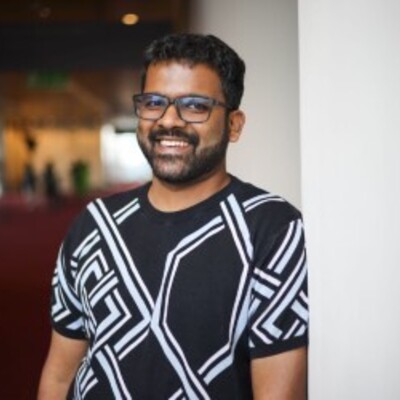
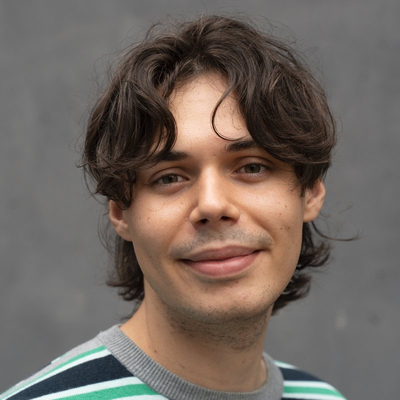
Udbhav Tiwari
(Vice President, Strategy and Global Affairs, Signal)
Shaping the future of secure communication.

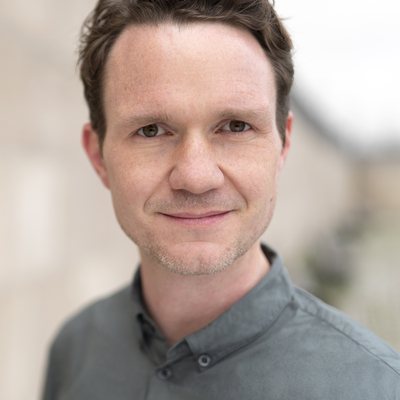
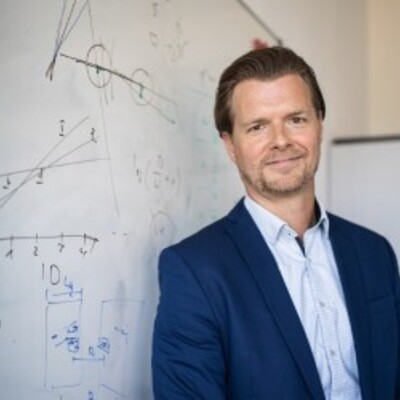
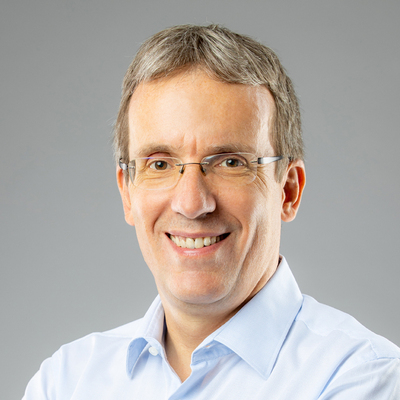
Prof. Dr. Frank Steinicke
(Professor of Human–Computer Interaction)
Inducted into the AWE XR Hall of Fame for his pioneering work in virtual reality.

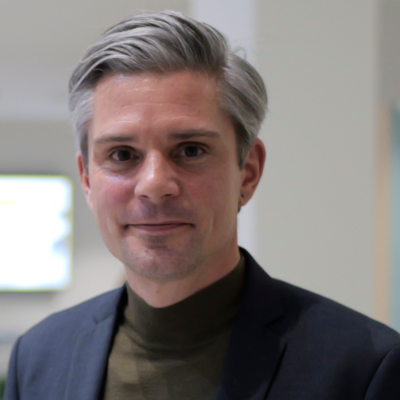
Prof. Dr. Eckart Voigts
(Professor of English Literature and Cultural Studies)
Expert in speculative fiction, utopia/dystopia, science fiction and fantasy.
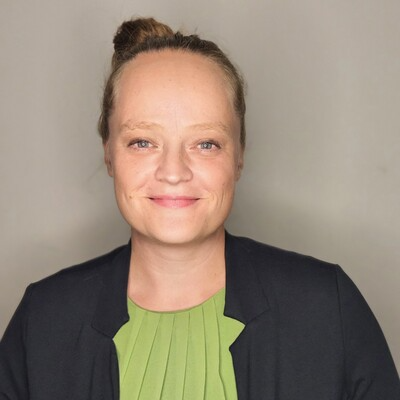
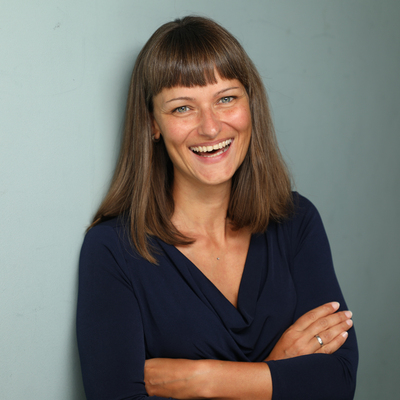
Theresa Hannig
(Three‑time Seraph Award winner, science‑fiction author and columnist)
Writes about the future of society, politics, artificial intelligence, surveillance and revolution.
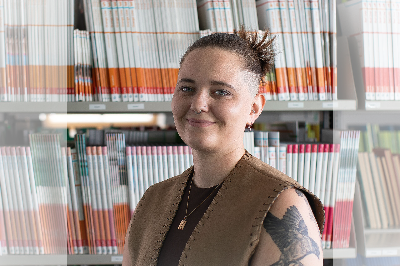
Aylin Dilek Walder
(Researcher and PhD student in American Studies): Expert in identity, otherness and environmental critique in speculative fiction.
All programme sessions that took part on the Future‑Tech:Stage Braunschweig can found in the full programme overview.
Supporting Programme
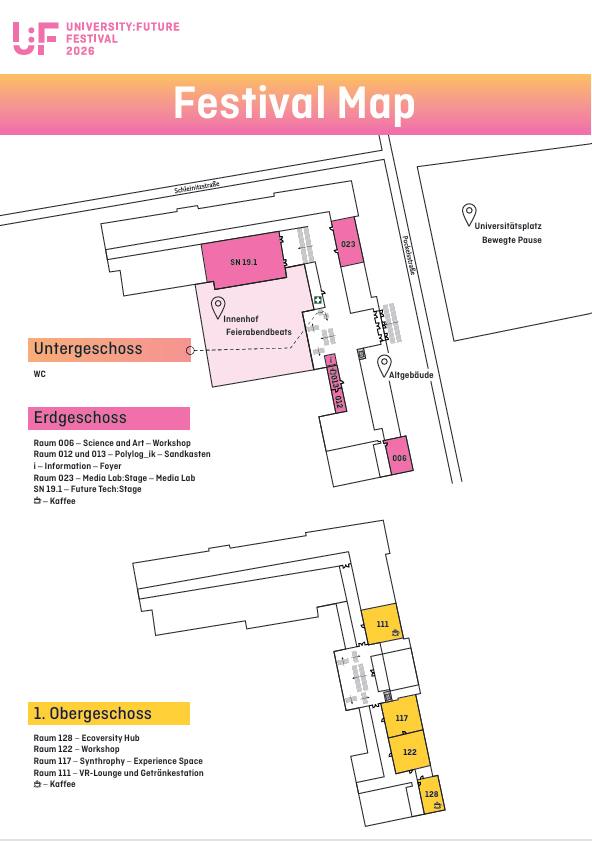
In addition to the sessions on the Future‑Tech:Stage and the Media Lab:Stage, a range of further highlights took place as part of U:FF 2026 in Braunschweig.
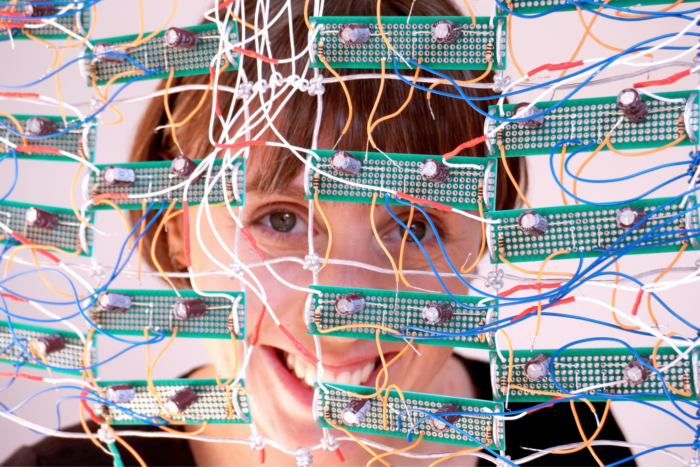
On the ground floor, the Science and Art Lab invited participants to a workshop with British sculptor Louise Ward Morris. As an artist-in-residence at the Science and Art Lab at the Technical University of Braunschweig, the artist is currently collaborating with scientists from the Nitride Technology Center (NTC).
She describes herself as a “media archaeologist” and, in her artistic practice, combines diverse interests from the fields of technology, architecture, psychology, and science to explore how technology shapes our humanity.
In the “Screen Sculpture Workshop,” she made the physical side of digital technologies visible by dismantling hardware and addressing the issue of electronic waste: We took monitors apart and transformed them into transparent screen sculptures using sculptural and collage techniques. At the same time, we learned more about the everyday technology that we can actually repair quite easily.
The Sandkasten opened its doors to provide insights into the success story of this low-threshold campus participation. Here, visitors had the chance to become involved in volunteering alongside their studies and teaching: with the support of the digital platform “Sandkasten,” individuals implemented their own ideas and actively helped shaping both city and campus life.
The platform provided not only inspiration and a network of like-minded people but also everything needed for implementation—from rental equipment to financial support for projects. Whether the goal was to create sustainable change or simply to be part of the community, the Sandkasten platform supports these endeavors. Additionally, in the rear section of the Sandkasten, Polylog_ik found a temporary home for its “telephone booth for the future”.
On the first floor, the Ecoversity Hub offered an opportunity for direct interaction with our keynote speakers as part of their Changemaker Café (10:00 a.m. – 4:00 p.m.). Over coffee and cake, there were ongoing discussions about development processes at the university, while you could also experience our highlights through exclusive conversations. The keynote times in the Ecoversity Hub were listed in the overview below.
Rabea Rogge: 11:00 a.m. – 12:00 p.m. (including book signing)
Udbhav Tiwari: 12:30 p.m. – 1:00 p.m.
Prof. Dr. Angela Ittel: 1:00 p.m. – 1:55 p.m.
Theresa Hannig: 2:30 p.m. – 3:00 p.m. (including book signing)
Prof. Dr. Frank Steinicke: 3:30 p.m. – 4:00 p.m.
Our workshop space hosted a variety of engaging participatory formats. From 10:00 a.m. to 1:15 p.m., participants could attend Learning Between Presence and Virtuality: Didactics in Cross Reality (Anke von der Heide), a series of lightning talks held within a shared cross-reality environment that connected physical exhibition spaces with remotely connected participants. Attendees experienced XR not only as a topic but also as a communication space in its own right.
Our workshop spaces hosted a variety of engaging participatory formats. From 10:00 a.m. to 1:15 p.m., participants could attend Learning Between Presence and Virtuality: Didactics in Cross Reality (Anke von der Heide), a series of lightning talks held within a shared cross-reality environment that connected physical exhibition spaces with remotely connected participants. Attendees experienced XR not only as a topic but also as a communication space in its own right.
Starting at 2:15 p.m., Assessment Formats in the Age of AI – What Is Still Possible? (Susanne Schorer, Kira Baresel) invited higher education educators to explore what forms of assessment were still meaningful in the era of artificial intelligence and how the quality of teaching and learning could be ensured. Using the Walt Disney Method, participants collaboratively developed innovative assessment formats and practical solutions.
At 5:00 p.m., Love in Times of AI (Prof. Dr. Maja Jerrentrup) offered an interactive discourse workshop in which participants became part of both the artwork and the discussion through body painting.
Directly adjacent to the workshop space, Synthropy transformed an entire room into an immersive biotechnology projection environment—the perfect place to escape the hustle and bustle of the festival for a moment.
In the lounge area, visitors found a colorful selection of furniture exhibited by pro office, as well as the opportunity to relax in a VR experience with Asfixia (Briam Rolón) and to explore VR-based training for safe and effective learning processes (Robert Eckardt).
During the lunch break, the University Sports Center offered short exercise sessions as part of the corporate health management program. The 15-minute PausenExpress consisted of a mix of mobilization, strengthening, and stretching exercises. Specifically, the shoulder, neck, and back areas were mobilized, trained, and relaxed.
Experience Space
For participants on site, the Experience Space offered various opportunities to explore and experience emerging technologies. participants were invited to engage directly, interact, and become part of the experience.
Polylog_ik
A ringing phone. A countdown. Your vision of the future – now. Inside a phone booth, visitors formulate their ideas under time pressure and respond to the voices of previous participants. Every contribution becomes part of a growing conversation. Nearby, armchairs and an analog telephone invite visitors to listen, reflect, and leave comments. The recorded pitches are also transferred into a digital space, where they can be discussed and expanded online.Between pressure, resonance, and virtuality, a polylogue emerges. What becomes possible when no algorithm pre-sorts the conversation?
Synthrophy
This immersive installation transforms real metabolic parameters from yeast cells into generative visuals and spatial sound. Visitors enter the cell itself, where nutrient changes and genetic variations dynamically reshape audiovisual structures, making cellular processes perceptible as an evolving digital ecosystem. By translating cellular processes into immersive sensory experience, it invites dialogue about how biological innovation shapes society.
Asfixia – Out of Breath
Asfixia is an immersive piece focused on a distressing yet reflective environment through a fluid & minimalist setting of space, characters & sounds.
It arises as an digital audiovisual experiment, seeking to create a feeling of intense breathing in the audience. The inspiration for this piece comes from experiences with being under pressure to the point of feeling out of breath. It opens a space for questioning about pressure on the individual & collective bodies.
VR Training for Safe and Effective Learning Processes
How can learning with VR be made safer, more efficient, and more effective? This presentation showcases empirically validated VR training scenarios and demonstrates how clear information design, learning-oriented user experience, and modular scenario structures can improve learning outcomes, reduce errors, and better prepare learners for real-world action. Attendees will gain insights into the underlying methods, research findings, and practical applications.
Dance Your Data
Dance Your Data focuses on the exploratory and creative engagement with the body, body movement, and the medium of virtual reality. Different forms of bodily movement are transformed into visible data traces, becoming objects of exploration, design, and reflection. For example, participants can imitate the movements of virtual figures across different temporalities and record these movements as color trails or phase-image sequences. Dance Your Data illustrates how VR can be meaningfully integrated into physical education in schools, supporting both creative expression and reflective learning through movement-based data visualization.
Learning between the physical and virtual worlds: Teaching in Cross Reality
How can Cross Reality (XR) be integrated into higher education in a participatory and accessible way? The XRwise research project is developing a hybrid, no-code platform that facilitates interactions in a shared virtual environment, thereby enabling learning across physical and digital spaces. This platform highlights the pedagogical potential of XR formats and discusses practical, pedagogical and organisational hurdles in real-world teaching contexts.
On 23 June, we will present lightning talks from a shared virtual space, which will be broadcast live to the festival venues in Braunschweig and Berlin. Lecturers from various universities will each give a five-minute presentation on their experiences. On all other days of the festival, existing teaching and learning spaces will be accessible both online and at the festival venue in Berlin, and can be explored. Participants can attend in person or join remotely.
The programme: xrwise.tech/uff
Remote participation: xrwise.tech/join
Evening Event
Following the program on the Future-Tech:Stage at 06:30pm, the afterhour kicked off with the popular Feierabendbeats. Organized by students for students, this event brings a vibrant energy to the end of the university day. Come by and dance together in the courtyard of the Altgebäude as we head into the summer night! The project team was providing rich beats from local DJs, chilled drinks, and plenty of good vibes to set the perfect mood.
Stage Programme





Special Clusters
You can identify our special clusters by the emojis in the programme overview:
🚨Fringe: Unexpected connections, counterintuitive theses or radical experiments with format
🔄Fail & Learn: Failed projects from which do’s and don’ts can be derived
🌍Global Perspectives: Ideas, perspectives and insights from abroad that are valuable for the DACH region
📚Student Voices: Contributions from students
🌱Environmental Sustainability: Contributions with an environmental focus


