
Open for Change:Stage Hamburg
The Open for Change:Stage Hamburg placed openness at the centre as a key response to societal change. Educational institutions and teachers are challenged to actively shape transformation and to take on new roles. Curated by the University of Hamburg and OERcamp, the stage invited participants to explore together how openness as an attitude and guiding principle can shape schools and teacher education for the future.
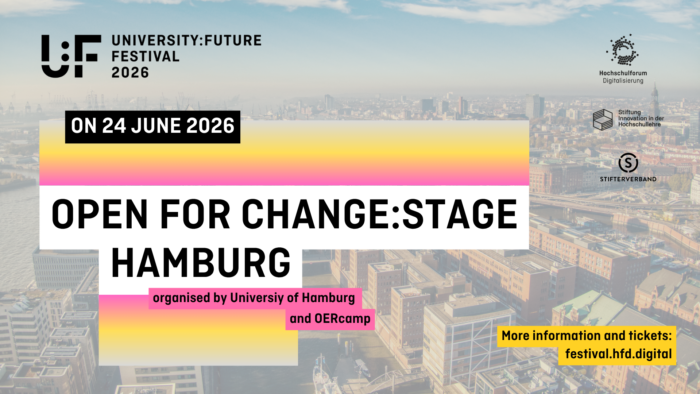
The in‑person stage in Hamburg is organised by the University of Hamburg and OERcamp.
OERcamp is part of the national OER Strategy and is funded by the German Federal Ministry for Education, Family Affairs, Senior Citizens, Women and Youth.
The Hamburg partner stage of the University:Future Festival (U:FF) is titled Open for Change:Stage – and that is precisely what it stood for: staying open, thinking ahead and creating new connections together.
Keynotes
Interactive programme
Evening programme
Stage programme
Keynotes (selection)
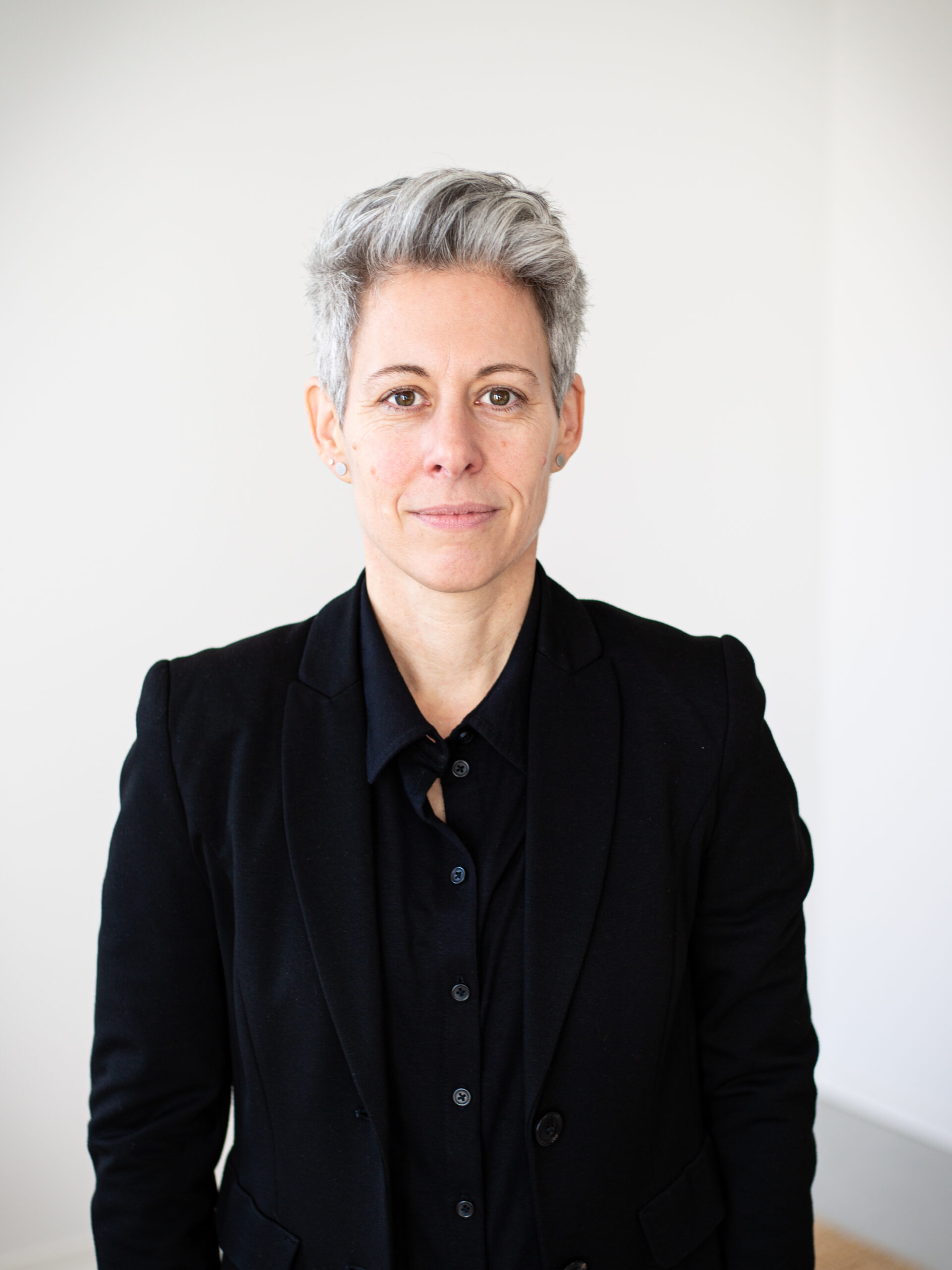
Julia Borggräfe
Author and consultant for strategic transformation and organisational development
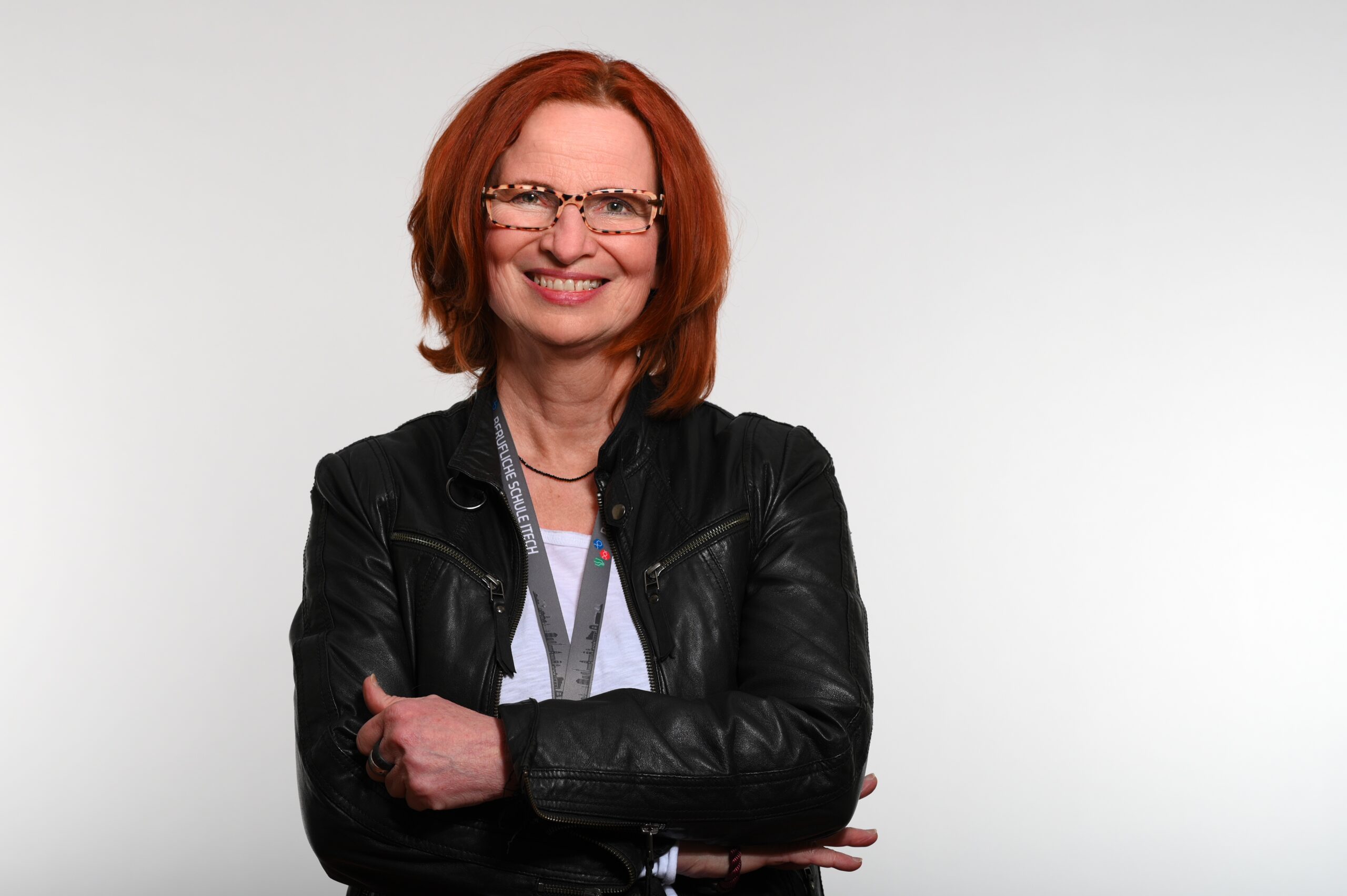
Monika Stausberg
Headteacher, Vocational School ITECH Elbinsel Wilhelmsburg, Hamburg
Jim Groom
“EDUPUNK poster boy” (Wikipedia) and retro‑technologist
Opening of the Hamburg Partner Stage with:
- Christina Schwalbe, Co‑host of the Open for Change:Stage, University of Hamburg & OERcamp
- Natalia Filatkina, Vice‑President for Studies and Teaching, University of Hamburg
- Esther Bishop, Head of Exchange and Networking, Foundation for Innovation in Higher Education
- Prof. Dr Kerstin Mayrberger, Professor of Teaching and Learning in Higher Education with a focus on Media Didactics, University of Hamburg, and Co‑Chair of the Advisory Board for the implementation of the German Federal OER Strategy (BMBFSFJ)
Our Diverse Programme
On the main stage, audiences were able to experience inspiring keynotes, engaging panels and concise lightning talks addressing key questions surrounding the future of education and transformation.
- Becoming professional under pressure: What schools undergoing change require from teacher education, Monika Stausberg
- Transformation is more than adaptation: Future viability as an institutional responsibility, Dr Julia Borggräfe
- LEARNING JOURNEY – Participatory teacher education for future‑ready schools, Louisa Schnetzer & Maren Plaum
- Lightning Talk: Nurturing Openness: Strengthening Open Education in higher education, Nadine Linschinger & Kristina Neuböck
- Lightning Talk: Why the Open Science movement needs students, Robin Wensky, Laura Ragab & Johannes Wagner
- Lightning Talk: 2,040 cups of coffee for digital sovereignty: MoodleMoot DACH 2025, Anja Lorenz
- What does future‑oriented education look like?, Wanda Möller
- Is punk dead (in education)? What does EDUPUNK mean in 2026?, Jim Groom
- Panel discussion: Crossing Borders – OER as a connector between business, vocational and academic education, Henning Klaffke, Axel Grimm, Rainer Karcher & Anthea Wagner
- AI and co‑creation in the classroom – Impulses for teacher education, Celestine Kleinesper
- Social media for third‑party funded projects: Transfer, attitude and dissent, Christine Kolbe
- Panel discussion: Openness in higher education: Structures and cooperation, Noreen Krause, Anja Lorenz & David Stoellger
- Teaching analytics – who actually uses my OER materials?, Marco Winzker
Interactive programme
Beyond the Open for Change:Stage
Beyond the stage programme, the Open for Change:Stage invited participants to engage in dialogue, discover new perspectives and actively shape the future. An open atmosphere created space for exchange, spontaneous encounters and collaborative thinking – spanning practice, research and society. This was not only about listening, but about participating, connecting and experiencing.
Workshops and Live Podcasts at the Tea House
The Tea House offered an inspiring setting for hands‑on workshops, creating space for creative work, in‑depth exchange and experimentation.
- Education is on fire – can teacher education save it?
(Live podcast Update Hochschule) with Ronny Röwert & Franz Vergöhl - Open Education under pressure: Let’s save the OER movement!
Workshop with Nadine Linschinger & Kristina Neuböck - Is EDUPUNK dead?
A conversation between Jim Groom, the “poster boy for edupunk”, and Jöran Muuß‑Merholz (live podcast) - Hack the Infrastructure!
Workshop with Kathrin Rabsch & Anna Neuenfeld
Co‑Working and Networking Area with Arts & Experience Programme
Our co‑working and networking area offered interactive formats that encourage experimentation, discussion and reflection.
University for New Realities
This initiative turns traditional educational logics upside down: instead of ECTS credits, the focus lies on societal impact and personal development. Students work on real SDG challenges and collect so‑called Impact Coins for the impact they achieve. These make individual competence profiles visible and open up new ways of understanding learning and performance.
Facilitated by: Ann‑Christin Jürgensen, Annett Lehmann & Sophie Heins
Transform.Ed – School of the Future
Transform.Ed presents two innovative prototypes for interactive school development. In a serious game, participants assume the role of a school leader and make strategic decisions. The Koopendium complements this by offering practical insights, experiences and recommendations from the Leuphana Innovation Community – for everyone interested in rethinking school.
Facilitated by: Ninja Müller & Dennis Wohlfeil
More information about the online Barcamp on 22 June
Another special highlight was the open format of the online barcamp, organized by Annabelle Putscher and Frank Homp as part of OERcamp. On 22 June from 1:15 p.m. to 5:00 p.m., everyone interested was invited to contribute their own topics, discuss questions, and work together to develop new ideas around digital and open education.
Evening programme
The day concluded with a relaxed get‑together – a deliberately created space to continue conversations, develop ideas and build new connections. Set within the beautiful indoor and outdoor spaces of YU GARDEN, participants were invited to deepen discussions from the day, explore opportunities for collaboration and network informally.
Stage programme

Special Clusters
You can identify our special clusters by the emojis in the programme overview:
🚨Fringe: Unexpected connections, counterintuitive theses or radical experiments with format
🔄Fail & Learn: Failed projects from which do’s and don’ts can be derived
🌍Global Perspectives: Ideas, perspectives and insights from abroad that are valuable for the DACH region
📚Student Voices: Contributions from students
🌱Environmental Sustainability: Contributions with an environmental focus. Criterion: Contributions must place a particular emphasis on the topic of sustainability


