
23. Juni 2026, 10:50 – 11:20 Uhr
Lost Talent, Lost Progress: Opening Access to Top Universities
High-achieving students from disadvantaged backgrounds are still underrepresented at the most prestigious universities – not because of a lack of ability, but because information and outreach, selection processes, and scholarship access are unequally distributed. Drawing on student-led work in Project Access Germany (mentoring, resources, and policy outreach), we ask: which barriers matter most, and what can universities, funders and student initiatives do that is evidence-informed and scalable? Participants will leave with a practical ‘barrier map’, examples of effective and low-cost interventions, and inspiration to turn mentoring insights into more equitable institutional policy.
Sie sehen gerade einen Platzhalterinhalt von Standard. Um auf den eigentlichen Inhalt zuzugreifen, klicken Sie auf den Button unten. Bitte beachten Sie, dass dabei Daten an Drittanbieter weitergegeben werden.
Weitere InformationenLiteratur: Bell, A. M., Chetty, R., Jaravel, X., Petkova, N., & Van Reenen, J. (2019). Who becomes an inventor in America? The importance of exposure to innovation. The Quarterly Journal of Economics, 134(2), 647–713. Bourdieu, P. (1986). The forms of capital. In J. G. Richardson (Ed.), Handbook of theory and research for the sociology of education (pp. 241–258). Greenwood Press. Jack, A. A. (2019). The privileged poor: How elite colleges are failing disadvantaged students. Harvard University Press Montacute, R., & Cullinane, C. (2023). 25 years of university access: How access to higher education has changed over time. The Sutton Trust.
Beitragende: Dr. Franz Rembart
Zusammenfassung: dlc.sh/sessionaizer/sessions/414
Speaker:innen
 Florian Brunner
Head of Project Access Germany e.V. Milica Arseniijevic
Global Director of Fundraising and Partnerships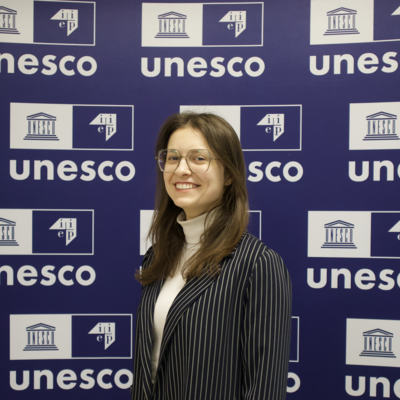 Jael Fechler
Head of Project Access Germany e.V.
Track
People
Raum
Global Perspectives (DIGITAL)
Sprache
EN
Format
Input
Sondercluster
Student Voices


