
23. Juni 2026, 14:15 – 16:15 Uhr
Speculating educational futures: agency, imaginaries and tensions
Universities are navigating rapid digital transformation that often demands immediate decisions. This sense of urgency usually leaves little room to question underlying premises and implications. In such contexts, the responses tend to become reactive rather than strategic. This workshop examines how dominant technological narratives shape these dynamics and asks how educators and staff can exercise situated agency within them. Through future-oriented, participatory, and speculative methodologies, participants surface implicit assumptions and explore alternative courses of action. They develop new perspectives on educational futures and gain transferable methodological tools to engage actively and critically in institutional decision-making.
Literatur: Bayne, S., & Gallagher, M. (2021). Near Future Teaching: Practice, policy and digital education futures. Policy Futures in Education, 19(5), 607-625. https://doi.org/10.1177/14782103211026446. Bayne, S., & Ross, J. (2024). Speculative futures for higher education. International Journal of Educational Technology in Higher Education, 21(1), 39. https://doi.org/10.1186/s41239-024-00469-y. Castañeda, L., Viñoles, V., Concannon, F., Pedersen, A., Al-Hmiedat, P. & Lobato, N. (2023). The CUTE CANVAS: developing a design tool for planning strategic actions for institutional of digital competencies, Journal of Decision Systems, 33(1), 30-52, https://doi.org/10.1080/12460125.2023.2167274. Dunne, A., & Raby, F. (2024). Speculative Everything, With a new preface by the authors: Design, Fiction, and Social Dreaming. MIT press. Osberg, D. (2018). Education and the Future: Rethinking the Role of Anticipation and Responsibility in Multicultural and Technological Societies. In: Poli, R. (eds) Handbook of Anticipation. Springer, Cham. https://doi.org/10.1007/978-3-319-31737-3_88-1. Pischetola, M., Stenalt, M. H., Nøhr, L., Hagood, D. E., & Misfeldt, M. (2024). Desirable and realistic futures of the university: A mixed-methods study with teachers in Denmark. International Journal of Educational Technology in Higher Education, 21(1), 29. https://doi.org/10.1186/s41239-024-00459-0. Ross, J. (2023). Digital Futures for Learning: Speculative Methods and Pedagogies. Abingdon and New York: Routledge. Suoranta, J., Teräs, M., Teräs, H. et al. Speculative Social Science Fiction of Digitalization in Higher Education: From What Is to What Could Be. Postdigit Sci Educ 4, 224–236 (2022). https://doi.org/10.1007/s42438-021-00260-6. Werner, K., & Nestler, A. (2025). Co-Creating Futures: A Practical Guide to Speculation Workshops Connecting Research, Design, and Society. Humboldt-Universität zu Berlin. https://doi.org/10.18452/31342.
Methode: This workshop combines speculative futures, co-design, and participatory methods. Short audiovisual prompts, including brief excerpts from the anime Ghost in the Shell, stimulate reflection on possible futures, technological imaginaries, and institutional tensions. Participants engage in collaborative scenario-building exercises and create tangible future artifacts. Through group discussions and plenary reflection, these exercises help explore assumptions about current digital transformation processes and generate shareable outputs. Interaction is dialogical and collaborative, giving participants hands-on experience in imagining and shaping possible educational futures.
Speaker:innen
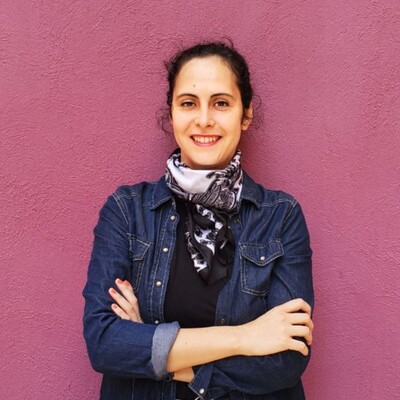 Virginia Viñoles Cosentino
Researcher Bárbara A. Bielitz
Independent artist and educator
Track
Connected University
Raum
Connected University (DIGITAL)
Sprache
EN
Format
Workshop
Sondercluster
Fringe


